


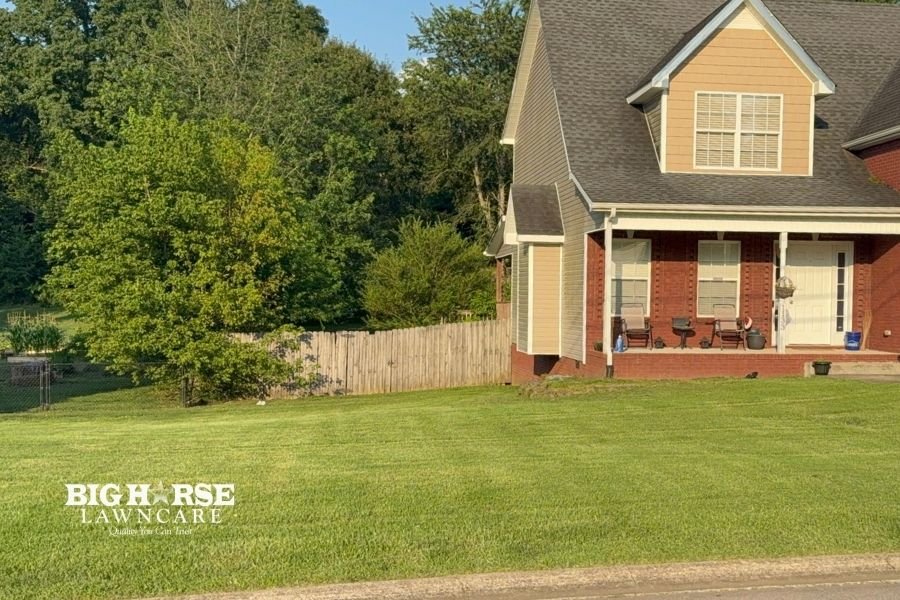
Summer in Clarksville moves fast, and your lawn feels it before you do. The heat, the clay soil, and the weeds that come with both can turn a decent yard into a mess within a few weeks. These five summer lawn care tips will help you stay ahead of the season and keep your yard in good shape from June through August.
Why Summer Is Hard on Lawns in This Region
Clarksville and the Fort Campbell area sit in a climate transition zone, which means the summer heat is intense enough to stress both warm-season and cool-season grasses. Clay-heavy soil across Montgomery County makes things worse by trapping heat, resisting water, and compacting quickly.
- Heat stress hits fast. Temperatures in the upper 90s from late June through August push turf to its limit, especially in yards without shade.
- Clay soil compounds the problem. Water runs off instead of soaking in, roots struggle to breathe, and compaction builds up season after season.
- Transition zone grasses are high-maintenance. Neither fully warm-season nor fully cool-season grass thrives here without some extra attention during peak summer months.
- Neglect in spring shows up in summer. Lawns that skipped fertilization or weed control in April and May are always the first to fall apart when the heat arrives.
Knowing what you’re working against is the first step. The tips below address each of these pressure points directly.
Tip 1: Water Deeply, Not Daily
Most homeowners water too often and not deeply enough. Light daily watering keeps moisture near the surface, which trains roots to stay shallow and makes your lawn much more vulnerable when temperatures spike.
- Water two to three times per week. Deep, infrequent sessions push moisture 4 to 6 inches down and force roots to grow deeper where the soil stays cooler.
- Water before 9 a.m. Early morning watering reduces evaporation loss and keeps the grass dry by afternoon, which cuts down on fungal issues.
- Avoid evening watering. Grass that stays wet overnight is far more likely to develop fungal problems, especially in the humid summers common in this area.
- Watch for drought stress signals. A blue-gray tint to the turf, footprints that stay visible after walking across the yard, and curling grass blades all mean your lawn needs water now.
- Aim for one inch of water per week. Between rainfall and irrigation, one inch per week is the standard target that supports healthy root depth without overwatering.
Deep, infrequent watering is one of the single highest-impact changes most homeowners can make. Get this right and every other tip on this list becomes easier.
Tip 2: Mow at the Right Height
Cutting your grass too short in summer removes the leaf blade that shades the soil and protects the root zone. Scalped turf heats up faster, dries out faster, and becomes an open invitation for weeds to move in.
- Keep tall fescue at 3.5 to 4 inches. Fescue is common in shaded and mixed yards around Clarksville and needs extra height in summer to handle the heat.
- Keep bermudagrass at 1.5 to 2.5 inches. Bermuda handles full sun well and tolerates a lower cut, but going below 1.5 inches in peak heat still causes stress.
- Follow the one-third rule. Never remove more than one-third of the blade height in a single mow, regardless of grass type. Cutting too much at once shocks the plant.
- Mow more often, not lower. If your lawn grows fast in early summer, raise your blade and mow more frequently instead of cutting it short to buy extra time between sessions.
- Keep your mower blades sharp. Dull blades tear the grass rather than cut it cleanly, leaving ragged edges that brown quickly and stress the turf.
Mowing height is one of the easiest things to control and one of the most commonly ignored. A simple blade adjustment before summer starts makes a noticeable difference within a few weeks.
Tip 3: Stay on Top of Fertilization and Weed Control
Crabgrass, nutsedge, and broadleaf weeds move fast once the soil warms up and turf thins out from heat stress. A lawn that goes into summer without proper feeding and weed control is already behind.
- Apply slow-release fertilizer in early summer. Slow-release nitrogen feeds your lawn steadily over weeks without the burn risk that comes from fast-release products in high heat.
- Don’t fertilize during peak heat. Applying fertilizer when temperatures are above 90 degrees can burn turf and cause more damage than the weeds you’re trying to fight.
- Target weeds before they go to seed. One crabgrass plant can produce thousands of seeds. Controlling weeds early in summer prevents a much bigger problem in late July and August.
- Nutsedge needs a specific treatment. Standard broadleaf weed killers don’t work on nutsedge. If you’re seeing grass-like yellow-green shoots growing faster than everything else, it needs targeted treatment.
Timing is everything with fertilization and weed control in this climate. Getting the applications right in late spring and early summer protects your lawn for the rest of the season.
Tip 4: Refresh Your Mulch Before July
Mulch is one of the most underused tools in summer lawn and garden maintenance. A proper layer of mulch keeps soil moisture in, keeps soil temperatures down, and significantly reduces how hard you have to work the rest of the season.
- Apply 2 to 3 inches across all beds. Less than 2 inches loses most of the insulating and moisture-retaining benefit. More than 3 inches can trap too much moisture and create conditions for rot.
- Pull mulch away from tree trunks. Piling mulch against bark traps moisture against the tree and causes long-term damage. Keep a 2 to 3 inch gap around the base of every tree.
- Refresh before peak heat arrives. Late May to early June is the right window for the Clarksville area. Mulching after the worst heat has already hit reduces the benefit significantly.
- Choose the right material. Shredded hardwood and pine bark both work well in this region. Avoid dyed mulches that haven’t been tested for soil safety, especially in vegetable or herb beds.
Fresh mulch on your beds before July is one of the best investments you can make for both the look of your yard and the health of your plants through the hottest months.
Tip 5: Test for Soil Compaction and Plan for Aeration
Compacted soil is the hidden problem behind a lot of struggling Clarksville lawns. The clay-heavy ground in this region packs down under foot traffic and equipment, and once it does, water, air, and fertilizer can’t reach the roots effectively.
- Use the screwdriver test. Push a standard screwdriver into your lawn with hand pressure. If it won’t go past 2 inches easily, your soil is compacted and needs attention.
- Watch for puddles on flat ground. Standing water after rain on a level surface is a sign that water can’t penetrate the soil, which is a classic compaction symptom.
- Thin turf that won’t fill in is a signal. If bare patches keep returning despite reseeding and watering, compaction is likely blocking root establishment.
- Plan aeration for late summer or early fall. August through October is the best window for core aeration in Tennessee. Aerating in peak July heat does more harm than good.
- Pair aeration with overseeding. Aeration opens the soil and creates ideal conditions for new seed to make contact and germinate before cooler temperatures arrive.
Scheduling lawn aeration and overseeding before fall gives your grass the best shot at recovering from summer stress and building a thicker, stronger base for next year.
Ready to Stop Fighting Your Yard This Summer?
Big Horse Lawn Care has served Clarksville, Oak Grove, Fort Campbell, and the surrounding communities since the company was founded by a 23-year military veteran who built the business on the same discipline the job required. Most clients are military families who need someone they trust to care for their yard while they’re away, and that trust is something we take seriously every time we show up.
If you’re ready to get on a consistent schedule and take the guesswork out of summer lawn maintenance, book an appointment and we’ll handle the rest.
Summer Lawn Care Questions We Hear Often
How often should I water my lawn during a Clarksville summer?
Water two to three times per week with deep sessions that push moisture 4 to 6 inches into the soil. Always water before 9 a.m. to reduce evaporation and lower the risk of fungal issues. Daily light watering keeps roots shallow and leaves your lawn more vulnerable during dry stretches.
What grass types grow best in the Clarksville, TN area?
Clarksville sits in a climate transition zone where both tall fescue and bermudagrass are common. Tall fescue handles shade and mixed-sun yards well. Bermudagrass performs better in full-sun lawns and tolerates heat more effectively. Many yards in the area have a combination of both.
Can I mow and fertilize on the same day?
Yes, but mow first and then fertilize. Mowing after fertilizing spreads the product unevenly and reduces how effectively it reaches the soil. Wait 24 to 48 hours after applying fertilizer before watering, unless the product label specifies otherwise.
When is the best time to aerate a lawn in Tennessee?
Late summer to early fall, from August through October, is the best window for core aeration in Tennessee. Aerating in peak July heat stresses the lawn without giving it time to recover. Cooler soil temperatures in late summer allow new seed to germinate and establish before the first frost.
Does mulching really help during the summer heat?
Yes. A 2 to 3 inch layer of mulch slows evaporation, lowers soil temperatures around plant roots, and reduces weed growth in beds throughout the summer. The key is applying it before peak heat arrives in July, not after your plants are already stressed.
Do you have more answers to common lawn care questions?
Homeowners across Clarksville and the surrounding area ask us the same questions every season. Our lawn care FAQ covers the most common topics with direct, practical answers built around the local climate and soil conditions here in Middle Tennessee.