


A healthy Clarksville yard does not happen by accident. It comes from feeding your grass the right way, keeping weeds from gaining ground, and protecting your soil so everything you plant has a fair shot. Weed and feed treatments and fresh mulch are two of the most practical tools for doing exactly that, and when you use them together on a consistent schedule, the results compound over time.
This guide covers how each one works, why they support each other, how to time applications around Clarksville’s rainy periods, and how to build a simple seasonal plan you can repeat year after year. Whether you handle your own yard work or you are looking for a local team to take it off your plate, the information here gives you a clear picture of what it takes to build and keep a healthier yard.
What Weed and Feed Does for Your Lawn
Weed and feed is a combination product that delivers fertilizer and weed control in a single application. The fertilizer feeds your grass the nutrients it needs to grow thicker and develop stronger roots, while the herbicide targets common broadleaf weeds like dandelions, clover, and chickweed that compete with your turf for water, light, and space.
The two-stage effect is what makes it useful. Weeds typically begin to yellow and curl within one to two weeks as the herbicide works through their leaves and stems. Over the following weeks, the fertilizer pushes new grass growth, which fills in thin areas and shades the soil so fewer new weeds can sprout. You are not just killing what is there now. You are building conditions that make it harder for weeds to come back.
For a closer look at how a seasonal fertilization and weed control program fits into a residential yard, it helps to think beyond one application and focus on what repeated treatments do over a full growing season.
What weed and feed does well
- Treats fertilization and broadleaf weed control at the same time, reducing the number of separate applications you need.
- Thickens turf over time, which naturally shades soil and limits weed seed germination.
- Improves overall lawn color and density, especially in areas that have gone thin from heat or foot traffic.
- Builds resilience so grass handles summer stress, dry spells, and heavy use better across the season.
Weed and feed is not a one-time fix. It works best as part of a consistent lawn care routine that includes proper mowing height, deep and infrequent watering, and attention to soil health. Think of each application as one layer in a longer process.
When it works best
Most weed and feed products are designed for use when grass is actively growing and weeds are visible but not yet fully established. Early to mid spring is the most common window for a first application, with a follow-up possible in late summer or early fall depending on your grass type and local conditions. Tennessee homeowners can compare local timing against the UT lawn maintenance calendar to understand how mowing, fertilizing, and weed control fit together through the year.
Applying too early in the season, before weeds have broken through, reduces effectiveness. Applying too late in summer heat can stress already-warm turf. Following the product label closely and paying attention to soil moisture and weather conditions makes a real difference in the results you get.
How Mulch Supports Your Soil and Your Beds
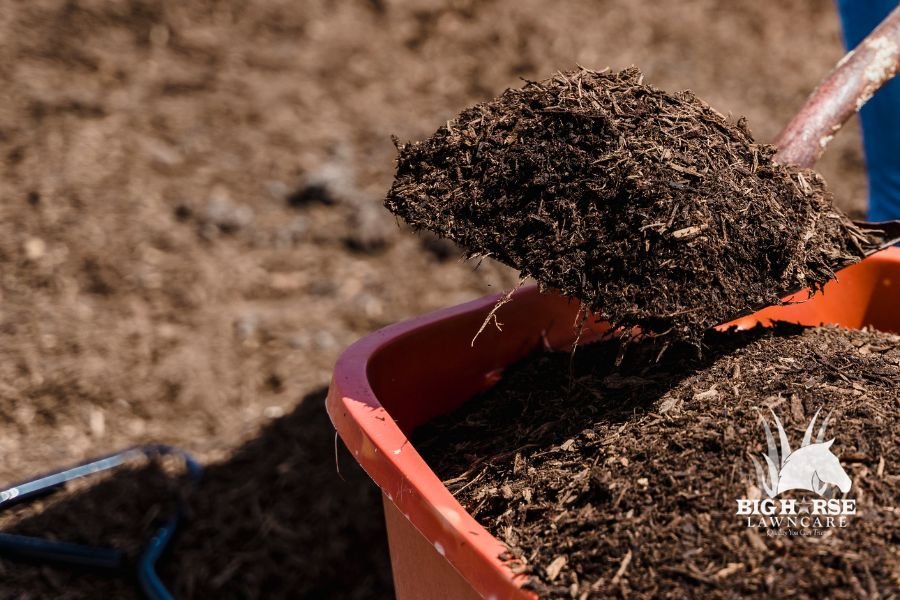
Mulch is a layer of organic material spread over the surface of soil in planting beds, around trees, and along shrub lines. Shredded hardwood and bark nuggets are the most common types used in residential yards. When applied correctly, mulch does several things at once: it holds moisture in the soil, moderates temperature swings, protects roots, and reduces the number of weeds that manage to sprout.
The moisture benefit alone makes mulch worth the effort in a Clarksville summer. Without a mulch layer, bare soil dries out quickly between rain events and watering, putting stress on plant roots. A good two to three inch layer slows evaporation significantly, which means your plants use available water more efficiently and your beds need less intervention to stay in good shape.
If you want to see how proper mulch installation and refresh supports the health of your beds, focus on the basics first: depth, coverage, and keeping material pulled back from trunks and stems.
How mulch reduces weed pressure
Weed seeds need light to germinate. A consistent mulch layer cuts off that light at the soil surface, which stops a large percentage of weed seeds from sprouting before they get started. Seeds that do manage to push through tend to be shallow-rooted and much easier to pull than weeds growing in bare, compacted soil.
This does not mean mulch eliminates weeds entirely. It means you are managing far fewer of them. Combined with a solid weed and feed program for the lawn, you end up spending less time hand-pulling and spot-treating across the whole yard.
Other things mulch does for your yard
- Keeps soil temperatures more consistent through summer heat and early fall cool-downs, which protects root systems.
- Reduces erosion in beds that catch runoff during Clarksville’s heavier rain events.
- Breaks down slowly over time and adds organic matter back into the soil, improving structure and supporting soil life.
- Gives beds a clean, finished appearance that makes the whole yard look more intentional and well-kept.
A proper mulch depth also gives you a maintenance advantage. Beds that are topped up annually take far less weeding time through the season than bare or under-mulched beds that give weed seeds direct access to soil. The University of Minnesota Extension explains how mulch supports soil moisture, temperature balance, weed suppression, and erosion control, which lines up closely with what homeowners see in real yards.
Why These Two Work Better as a Team
Weed and feed and mulch target different zones of your yard, but they are working toward the same outcome. Weed and feed strengthens the turf and reduces broadleaf weeds in the lawn. Mulch protects and supports the beds that border that lawn. When both are in good shape, the whole yard becomes more resistant to weeds, more consistent in appearance, and easier to manage.
Here is why that matters practically. A thick, well-fed lawn is harder for weeds to invade because dense grass shades the soil and leaves little open ground for seeds to land and establish. Clean, mulched beds stop weed pressure from migrating back into the lawn edges. You end up with a yard that is reinforcing itself rather than fighting itself.
The compounding effect over time
The first season you run a combined program, you will see improvements in turf density and a noticeable drop in the number of weeds breaking through mulch. By the second season, the lawn is thicker and more competitive on its own, and the beds have better soil from the organic matter the mulch has contributed. Each year builds on the last.
Homeowners who treat weed and feed and mulch as a single annual investment rather than two separate line items tend to spend less time on reactive fixes throughout the season. You are not chasing weeds. You are preventing them from getting a foothold in the first place.
Timing Weed and Feed Around Clarksville Rain
Clarksville gets meaningful rainfall through spring and into summer, with a pattern of quick-moving storms that can drop a lot of water in a short window. That variability makes timing important when you are putting down weed and feed, because the goal is light moisture that helps the product absorb, not a heavy downpour that washes it away.
Light rain within 24 to 48 hours after a granular application generally helps. It settles the granules into the turf canopy and begins moving nutrients down toward the root zone. Heavy thunderstorms, on the other hand, can push product off the lawn and into low spots, drains, or beds where you do not want it concentrated.
How to time applications around the forecast
- Check the forecast for three to four days out before applying. Look for a window with no heavy rain in the 24 hours immediately after treatment.
- A light shower or gentle rain within one to two days after application is a good sign, not a reason to wait.
- Avoid applying when the ground is already saturated or standing water is visible. Roots cannot use the fertilizer effectively, and runoff risk is high.
- For products that require the lawn to be moist before application, water the night before or apply early on a dewy morning, then keep the lawn dry for the period the label specifies.
- In summer, avoid applying during stretches of extreme heat when turf is already under stress, since fertilizer can burn a lawn that is not growing actively.
Working with a local lawn care provider takes most of this guesswork out of the equation. A team that works Clarksville properties daily has a feel for local weather patterns and can schedule applications around real-time conditions instead of a general calendar.
How and When To Refresh Your Mulch
Mulch breaks down over time. Organic materials like shredded hardwood and bark slowly decompose, which is actually good for soil health, but it means the layer gets thinner each season and eventually stops doing its job of blocking light and retaining moisture. Most beds in Clarksville need a refresh once a year to stay effective.
Early spring is the best time for a full refresh because you get ahead of warm-season weeds before they emerge. You go into the growing season with clean, properly-depth beds rather than spending the summer catching up. A secondary top-up in late summer or early fall is worth doing in high-weed or heavily wooded areas where the material breaks down faster.
Getting the depth right
Two to three inches of mulch is the target for most residential beds. Below two inches and you lose the light-blocking benefit. Above three inches and you risk trapping too much moisture against plant crowns and stems, which creates conditions that encourage rot and shallow root development.
When refreshing, measure actual depth in a few spots rather than guessing. Most beds only need an inch or so added on top of existing material in good condition. You do not need to strip and replace unless the old mulch has become compacted, matted, or is showing signs of mold or pest activity.
Steps for a clean and effective mulch refresh
- Walk every bed and assess current conditions. Check depth, look for weeds that have pushed through, and note any areas where mulch has washed out or thinned significantly.
- Remove weeds before adding new material. Adding mulch on top of existing weeds traps them under a fresh layer but does not kill them. Pull or treat first.
- Clear debris and loosen any crusted or matted areas. A quick pass with a rake breaks up compacted spots so water can still reach the soil.
- Add new mulch to reach your two to three inch target. Work evenly across the full bed rather than piling extra material in the center.
- Pull mulch back from direct contact with trunks, stems, and crowns. Leave a two to three inch gap around plant bases to allow air movement and prevent moisture buildup against bark.
- Check edges and re-define bed lines if needed. Clean bed edges improve the finished look and help keep mulch from migrating into the lawn.
A Seasonal Lawn Care Plan That Puts Both To Work
The most effective approach treats weed and feed and mulch as two parts of a single yard care plan rather than separate projects you get to when time allows. Here is how that plays out across the year in Clarksville.
Early spring
Start with a full yard walkthrough before any treatments go down. Note where grass is thin or bare, where weeds are already breaking through, and which beds have lost depth over winter. This assessment shapes every decision that follows and keeps you from spending time or product in areas that do not need it.
Spring: first weed and feed application plus mulch refresh
Once grass is actively growing and weeds are visible, your first weed and feed application goes down. Time it for a window when light rain is in the forecast within a day or two. Then, within the same week or shortly after, refresh the mulch in all beds back to full depth. Doing both in close sequence keeps the whole yard moving forward at the same time rather than improving one area while the other lags.
This is also a good time to address any bare lawn spots with overseeding, since the fertilizer from weed and feed supports new seed germination. Note that some weed and feed products affect seed germination, so check the label before combining the two in the same window. For properties where soil compaction has become a real issue, lawn aeration before overseeding opens the soil so seed makes direct contact and establishes more successfully.
Summer: monitor and manage
Through the hottest part of the season, the focus shifts from treatment to maintenance. Mow at a height that keeps grass from going under heat stress. Water deeply and infrequently rather than in short, frequent bursts that encourage shallow roots. Pull or spot-treat any weeds that break through mulch so they do not go to seed and multiply.
Summer is also when you get a clear look at which parts of the yard the spring program handled well and which need more attention in the fall. Basic habits like summer lawn care tips for mowing height and deep watering help Clarksville lawns hold up better through July and August. Thin areas, persistent weed pressure in specific spots, and beds washing out during storms all tell you something useful about where to focus next.
Late summer or fall: follow-up feeding and touch-up
Depending on your grass type and how the lawn responded to the spring program, a fall fertilizer application helps roots build strength heading into cooler weather. This is less about weed pressure and more about giving the lawn what it needs to recover from a full summer and come back strong the following spring.
Top up any beds that have thinned through the season, especially in areas with heavy foot traffic nearby or spots that catch a lot of storm runoff. Going into fall with mulch at proper depth means your soil stays protected through winter and you have less work to do when spring arrives again.
Yard Conditions in Clarksville and Oak Grove
Clarksville and Oak Grove share a climate that puts real pressure on residential yards. Summers are hot and humid, spring storms can be intense, and the transition into fall comes with its own set of challenges for turf that has been working hard since April. Clay-heavy soil in many neighborhoods compounds the problem by holding water after rain events and baking hard during dry stretches.
That soil profile is one reason weed and feed timing matters so much locally. When the ground is saturated after a heavy storm, fertilizer cannot absorb properly and runoff risk increases. When the soil has baked hard in a dry stretch, the same product struggles to penetrate. The sweet spot is a lawn that is moist but not waterlogged, which means watching the forecast rather than just picking a calendar date.
Lawn and bed issues common to this area
- Patchy or thin turf in high-traffic areas, on slopes, and in spots with compacted clay soil that limits root depth.
- Broadleaf weeds like dandelions and clover that spread quickly in thin or undernourished lawns.
- Mulch bed washout along slopes and near downspouts after heavy summer rain events.
- Hard, dense soil in low spots that drains poorly and stresses both grass and bed plants through wet periods.
- Weed pressure that migrates from neighboring properties or unmaintained lots, especially in high-density neighborhoods near Fort Campbell.
A consistent program of fertilization, weed control, and mulch refresh addresses most of these at their source rather than treating symptoms after they become visible problems.
Ready for a Healthier Clarksville Yard? Schedule Weed and Feed and Mulch Service
If you want to see real improvement in your Clarksville or Oak Grove yard, combining weed and feed treatments with regular mulch refresh is one of the most efficient moves you can make. A planned schedule keeps your lawn thicker, your beds cleaner, and your soil in better shape so you can enjoy your outdoor space with less effort.
You can follow the steps in this guide on your own, or you can hand the work to a local team that already understands Clarksville weather, soil, and common yard challenges. When you work with a provider that handles both fertilization and mulching, you get one plan instead of separate fixes in different parts of the yard.
Talk With Big Horse Lawn Care About Your Clarksville or Oak Grove Yard
Big Horse Lawn Care is a veteran-owned company serving Clarksville, Oak Grove, and surrounding communities. After 23 years of military service, the owner built this business on the same work ethic and attention to detail he carried throughout his career. Most customers are active military, deployed soldiers, or busy homeowners who need a dependable team to keep their property in good shape on a set schedule.
The team handles fertilization and weed control, mulch installation and refresh, aeration, overseeding, and more, so your yard gets a full plan rather than one service at a time. Every property is treated as if it belongs to someone on our own crew.
If you are ready to get your Clarksville or Oak Grove yard on a better schedule, book an appointment online or reach out through our contact page to ask questions and get a quote. We are ready when you are.
FAQ
How often should I use weed and feed on my lawn?
Most Clarksville lawns only need weed and feed once or twice a year. One spring application is enough for many yards, with a second treatment in late summer or early fall only if weed pressure and grass type justify it. Always follow the product label and avoid stacking multiple herbicide products too close together.
Is weed and feed safe to use before overseeding my lawn?
Some weed and feed products can interfere with seed germination, especially those that include pre-emergent herbicides. If you plan to overseed, check the product label for reseeding intervals and wait the recommended number of weeks before putting seed down. When in doubt, separate weed control and seeding into different windows so new grass can establish properly.
How deep should mulch be in my flower beds?
For most residential beds, two to three inches of mulch is enough. This depth helps block light from reaching weed seeds, protects roots, and holds moisture without smothering plants. Less than two inches will not do much for weed suppression, and more than three inches can trap too much moisture against stems and crowns.
How often should I refresh mulch in Clarksville?
Most Clarksville homeowners should plan to refresh mulch once a year, usually in early spring. This timing gets you ahead of warm-season weeds and sets up your beds for the growing season. In high-weed or heavily wooded areas, a light top-up in late summer or early fall can help maintain depth where mulch breaks down more quickly.
Can I put down weed and feed right before heavy rain?
It is better to avoid applying weed and feed right before a heavy storm. Strong rain can wash product off the lawn and into drains or low spots, which reduces effectiveness and can create runoff issues. Aim for a forecast with no severe rain in the 24 hours after application and, ideally, only light showers within a day or two.
Do I need both weed and feed and mulch, or is one enough?
Each one does a different job. Weed and feed focuses on the lawn by feeding grass and reducing broadleaf weeds, while mulch works in beds to protect soil, conserve moisture, and limit weed growth there. Using both together gives you a more complete result, with a stronger lawn and cleaner beds that support each other instead of working against each other.